
In Zumi's run of 8,740 answers, when ChatGPT mentioned a brand, the next run of the same question mentioned it again 54.7% of the time. In about 45 of 100 cases, the brand was gone a day later.
That makes a ChatGPT mention a rate, not a yes or no. A brand that checks once and finds itself in the answer has learned less than it thinks. A brand that checks once and finds itself missing may be in the answer tomorrow.
Key takeaways
- When ChatGPT mentioned a brand, the next run of the same question mentioned it again 54.7% of the time, across 17,873 cases.
- ChatGPT was the least repeatable of three engines measured. Perplexity repeated a mention 58.1% of the time and Google AI Overviews 62.3%.
- Across all three engines, only 6.3% of brand and question pairings showed the brand in every run.
- The work that raises the rate is well known: one consistent brand description, third-party coverage, and pages that answer the buyer's question first.
- Progress shows up as a rising mention rate across a fixed question set with repeat runs, not in any single answer.
Why is one ChatGPT answer not enough?
Zumi asked 304 beauty and personal care questions in India every day from July 23 to August 2, 2026, and recorded which brands each answer mentioned. For every brand that appeared, the next run of the same question on the same engine was checked for it again.
| Engine | Mention repeated on the next run | Cases |
|---|---|---|
| Google AI Overviews | 62.3% | 12,306 |
| Perplexity | 58.1% | 9,715 |
| ChatGPT | 54.7% | 17,873 |
ChatGPT held a mention least often of the three. The run covers one category in one market over 11 days, so it describes that run rather than ChatGPT everywhere. Gemini, Claude, and Copilot had no repeat runs in this data, so nothing here ranks them.
Across all three engines, a single run's result for a brand disagreed with that brand's usual result on the same question in 21.2% of observations. A single check disagrees with the usual result about one time in five, before anything about the brand has changed.
What raises a brand's mention rate in ChatGPT?
ChatGPT answers from two places. The base model draws on what it learned in training, and ChatGPT search reads live web results when a question calls for current information. The work that helps is the same for both, and it is well covered elsewhere, so the short version is enough:
- One description everywhere. The brand's site, LinkedIn, Crunchbase, review profiles, and press boilerplate describe the same category, audience, and difference. Entity optimization for AI covers the audit.
- Third-party coverage. Reviews, roundups, and trade coverage that mention the brand carry it into answers its own site cannot reach.
- Pages that answer first. The main claim sits in the first sentence, and the page states the facts a buyer compares in plain text that ChatGPT search can read.
- Specific, sourced claims. The GEO study from Princeton and partners found that statistics, quotations, and cited sources lifted a page's visibility in generative answers.
None of this moves a single answer on demand. It moves the rate, slowly, which is why measuring the rate comes first.
How many runs does a ChatGPT result need?
A mention that repeats 54.7% of the time needs repeat runs before a change means anything. Three rules follow from the data:
- A fixed question set. The same buyer questions run every time, so each result compares with the last.
- Several runs per question. On ChatGPT especially, a brand's presence is read as a share of runs, not a single answer. A one-off appearance or absence is a draw, not a finding.
- Engines kept apart. A ChatGPT figure is reported on its own. Averaged with AI Overviews, a steadier engine, it would look more stable than it is.
The trend across the set over several weeks is the result. A single screenshot of an answer is not.
Which sources sit behind a ChatGPT mention?
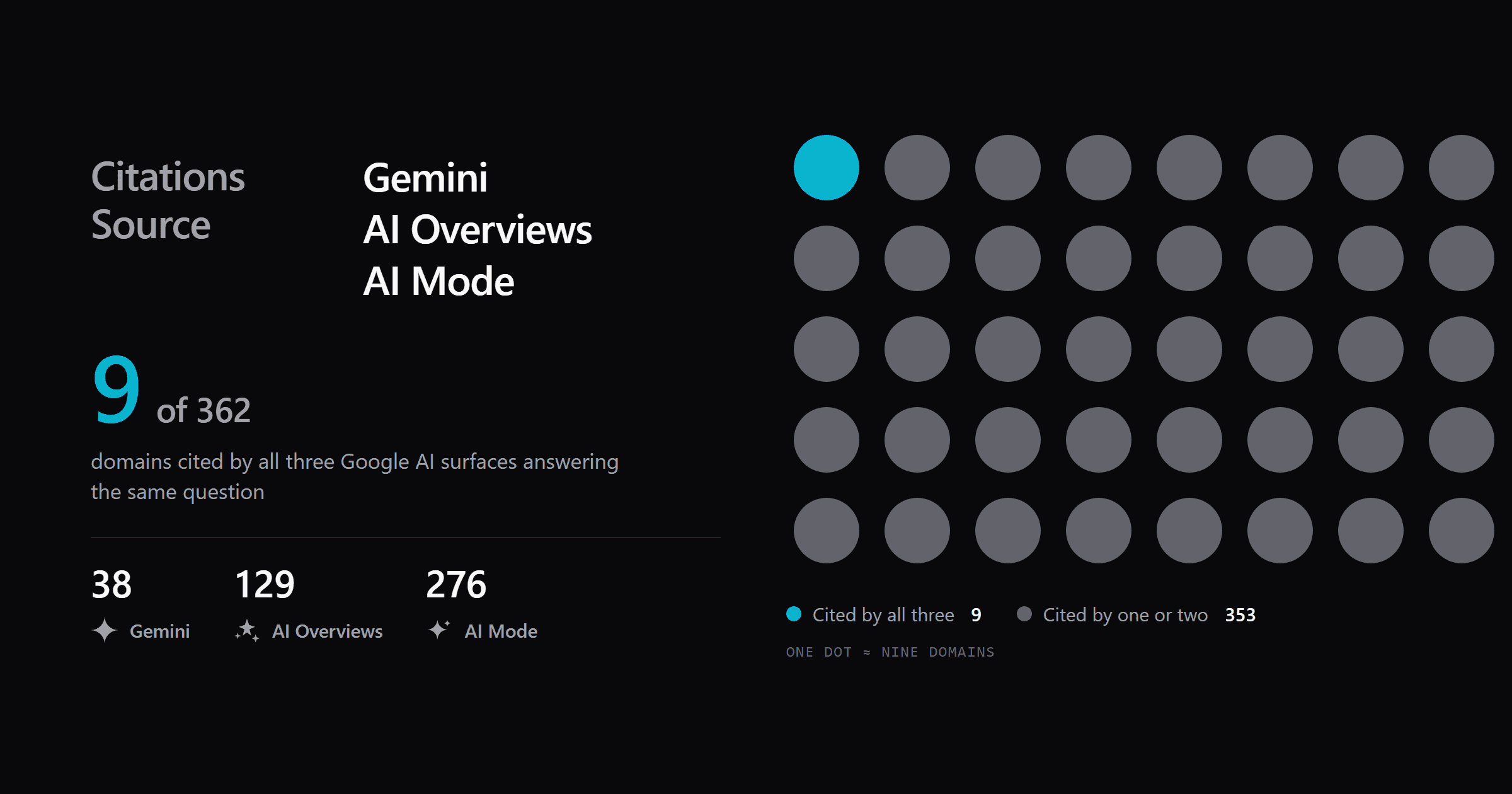
The rate says whether ChatGPT mentions a brand. The sources say why. Recording the domains ChatGPT cites beside each answer shows which third-party pages carry the brand and which carry its competitors instead.
That record also shows where the mention is fragile. A brand carried into the answer by one review page can fall out when that page changes. A brand carried by many sources tends to hold.
The manual baseline method covers how to take a first measurement without a platform. Which AI engine repeats a brand mention most often compares the engines in more depth, and how Perplexity decides which sources to cite covers the next engine.
Zumi is an AI Search Intelligence Platform that tracks how often ChatGPT, Perplexity, Google AI Overviews, and other major AI engines mention a brand, run after run, with the sources behind each answer. Book a demo to see a brand's ChatGPT mention rate on a real question set.