
In Zumi's run of 8,740 answers across 304 beauty-category questions, a brand mentioned in one answer was mentioned again on the next run 62.3% of the time on Google AI Overviews and 54.7% of the time on ChatGPT. Same questions, same brands, same 11 days.
A single visibility score averaged across both engines would report one number and hide a difference of 7.6 points in how much a single result can be trusted. That gap is the practical case for reporting AI visibility signal by signal and engine by engine.
Key takeaways
- Engines differ in how stable a brand mention is: Google AI Overviews repeated one 62.3% of the time, Perplexity 58.1%, ChatGPT 54.7%.
- A blended score mixes engines that need different numbers of repeat runs before a change means anything.
- Zumi's AI Visibility model reports four separate signals: mention rate, share of voice, average position, and citation share.
- Owned and third-party citations call for different work. In the same run, none of the 10 most-cited domains was a beauty brand's own site.
- Share of voice moves when the competitor list changes, even if the brand's own presence does not, so the competitor list travels with the number.
- AI visibility describes what engines said. It does not prove traffic, pipeline, or revenue.
What does a blended score hide?
A composite score folds several observations into one number through a weighting rule. The argument against that is now common. The more useful question is what, specifically, disappears when it happens.
The engine gap is one concrete answer. When a brand appeared in an answer, the next run of the same question on the same engine mentioned it again at these rates:
| Engine | Mention repeated on the next run | Cases |
|---|---|---|
| Google AI Overviews | 62.3% | 12,306 |
| Perplexity | 58.1% | 9,715 |
| ChatGPT | 54.7% | 17,873 |
Read separately, the table tells a team where one check is weakest. ChatGPT dropped a brand it had just mentioned in about 45 of 100 cases. A week-on-week change on ChatGPT therefore needs more repeat runs behind it than the same change on AI Overviews.
Blended into one figure, a rise on the stable engine and noise on the unstable one look identical.
Limits of the measure: one category, one market, 11 days, three engines. Gemini, Claude, and Copilot had no repeat runs in this data, so nothing here ranks them. The full method sits in which AI engine repeats a brand mention most often.
What does each signal measure?
Each of the four signals answers a different question, and none can stand in for the others.
- Mention rate: the share of eligible tracked answers that mention the brand. It measures presence.
- Share of voice: the brand's mentions as a share of all tracked-brand mentions. It measures presence against a declared competitor set.
- Average position: where the brand lands among the brands an answer mentions. It measures prominence, and it is not a search ranking, since a prose answer does not always produce a clean ordered list.
- Citation share: how often the brand's own pages are cited as sources. It measures owned-source support.
Zumi is an AI Search Intelligence Platform. Its AI Visibility model reports these four signals separately, refreshed daily, with the answers and cited pages behind each figure.
Why should owned and third-party citations be read separately?
Citation share counts the brand's own pages. A third-party page that discusses the brand is a different source with a different owner, and it calls for different work.
The split matters because engines lean on third-party sources heavily. In the same 8,740-answer run, answers carried 40,304 domain citations across 2,443 domains.
The 10 most-cited domains took 28.9% of them: Instagram, YouTube, Nykaa, Reddit, NBC News, AAD, Amazon India, Allure, Smytten, and Healthline. None of the 10 is a beauty brand's own site.
That changes how a low figure should be read:
- Low owned citation share, active third-party sources: the answer is being formed from retailers, publishers, and forums. The work is earned media, aimed at the sources the engine already uses.
- Low owned citation share, thin third-party sources: nothing strong is feeding the answer. The work starts with owned pages that state the facts the question needs.
- High owned citation share, low mention rate: the brand's pages support answers it rarely appears in, often as background. The work is on how the pages position the brand, not on more pages.
A single citation percentage that mixes owned and third-party sources cannot separate these three cases. The list of cited URLs can.
How does share of voice move without the brand moving?
Share of voice divides one brand's mentions by the mentions of every tracked brand across the same answers:
Share of voice = brand mentions ÷ all tracked-brand mentions × 100
The example below uses fictional brands and is not measured data. A panel of 20 answers from one engine in one market is checked for four tracked brands.
| Brand | Answers mentioning the brand | Share of voice | Mention rate |
|---|---|---|---|
| Northlane | 8 | 8 ÷ 30 = 26.7% | 8 ÷ 20 = 40% |
| Corvex | 12 | 12 ÷ 30 = 40.0% | 12 ÷ 20 = 60% |
| Ledgerra | 6 | 6 ÷ 30 = 20.0% | 6 ÷ 20 = 30% |
| Fernwell | 4 | 4 ÷ 30 = 13.3% | 4 ÷ 20 = 20% |
Now a fifth tracked brand, Driftbay, is added and mentioned 5 times. All tracked-brand mentions rise from 30 to 35, and Northlane's share of voice falls from 26.7% to 22.9%. Its own mentions did not change, and its mention rate stays at 40%.
A new competitor set starts a new share-of-voice series. A new engine does too.
Which scope must travel with every number?
A result is only comparable with a later one if the measurement stayed the same. The scope that travels with each figure:
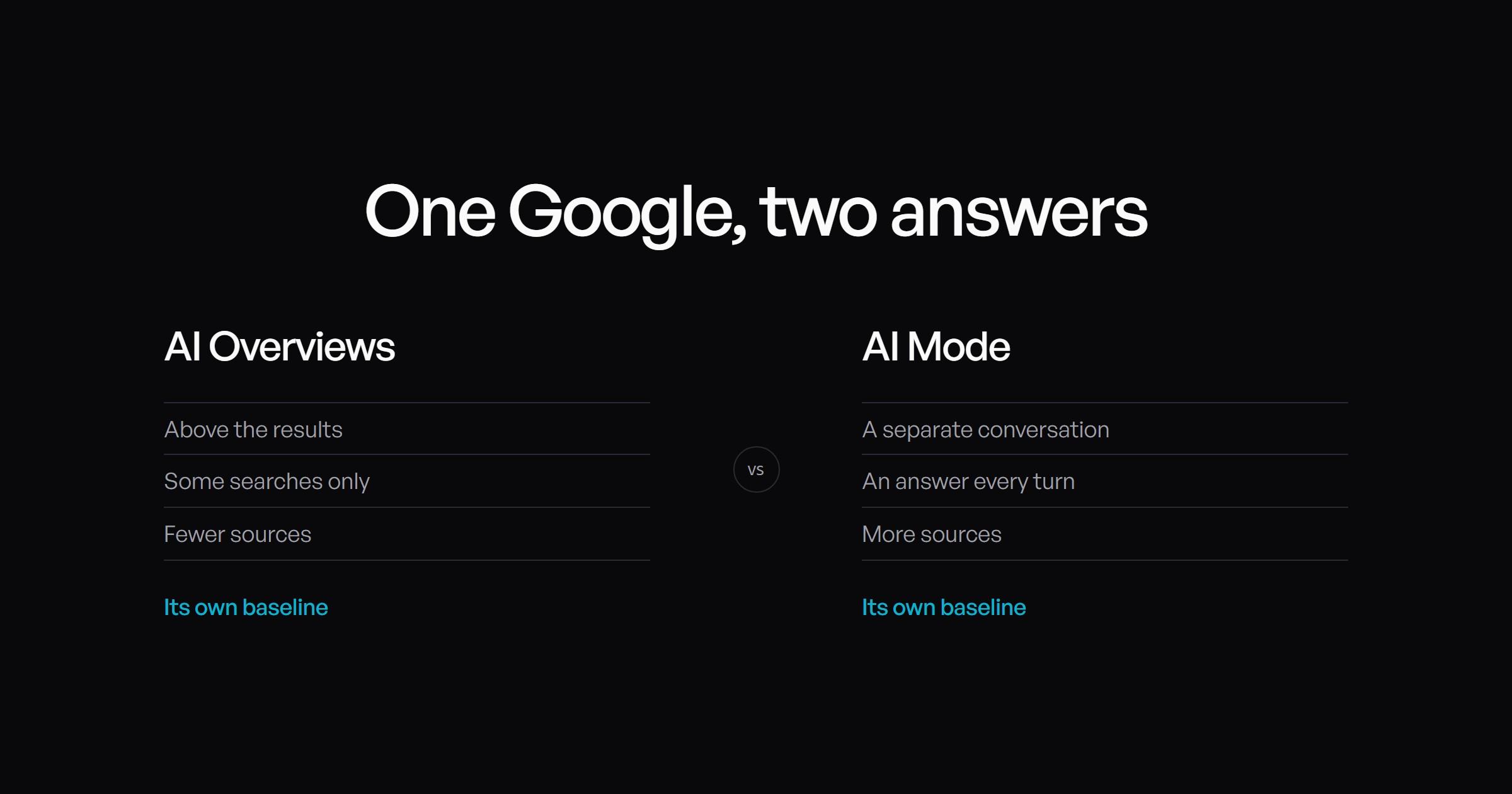
- Engine: the named product measured, reported separately, since stability differs by engine.
- Prompt panel: the exact questions, with a version.
- Market: geography and language.
- Sampling: dates, repeat runs per question, and exclusions.
- Entity set: the brand's names and the declared competitors.
- Counting rule: how mentions, positions, and citations are counted, and what each figure is divided by.
A ChatGPT figure cannot be silently averaged with an AI Overviews figure, and a global panel cannot be compared with an India panel as though the market stayed fixed. The scope does not remove variation. It stops a changed ruler from being reported as progress.
Which action does each pattern call for?
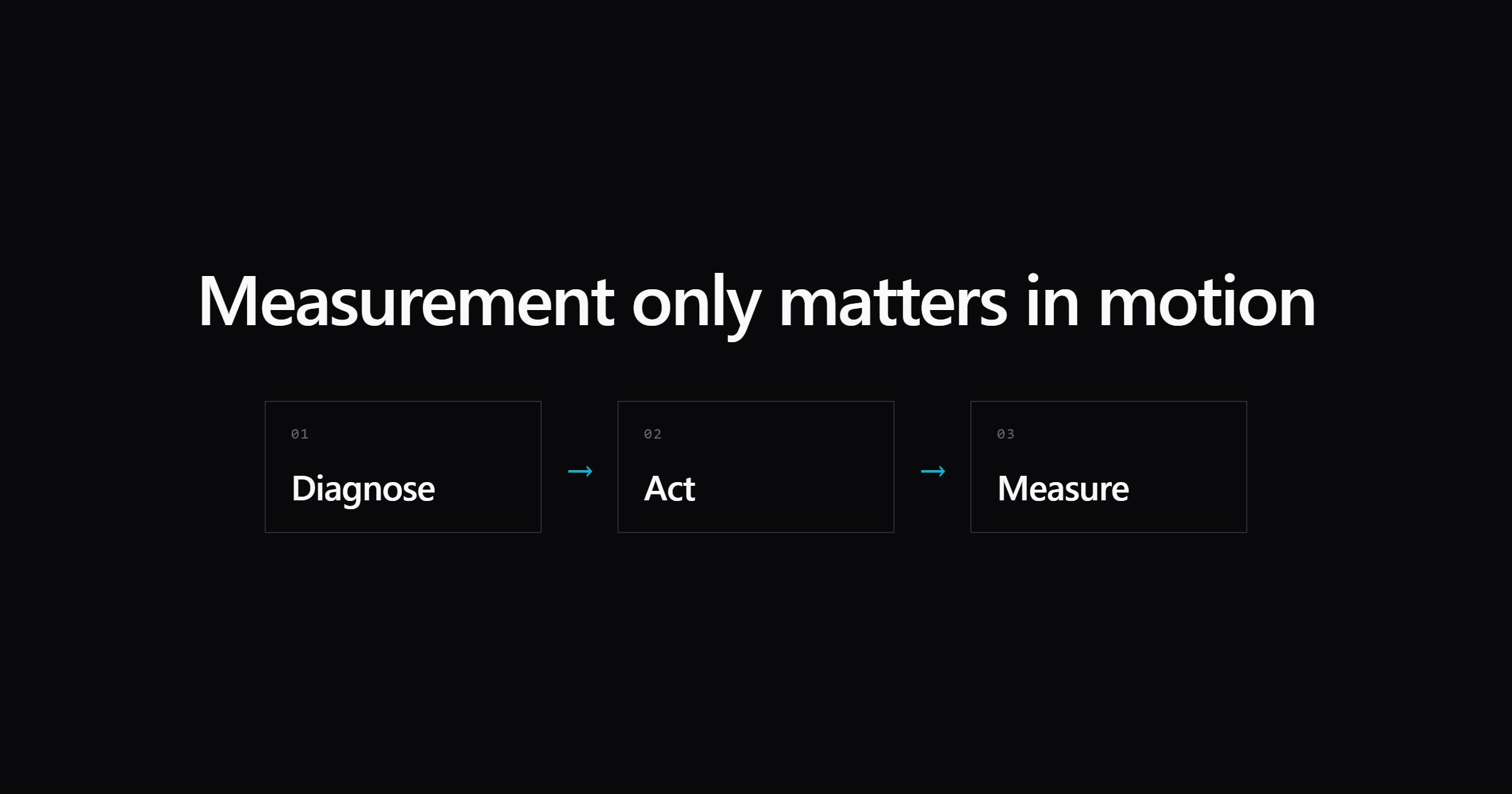
Each signal opens a different investigation:
- Low mention rate: missing category coverage, unclear brand information, or absent third-party support.
- Adequate mention rate, weak share of voice: rival presence by engine, question, and source.
- Frequent mentions, weak average position: the criteria and sources behind the brands that land earlier.
- Low owned citation share: missing or unusable pages, read against the third-party sources already cited.
- A change on one engine only: check the repeat-run count on that engine before treating it as a trend.
Zumi's Recommendations feature groups these actions into Owned Media and Earned Media. The platform identifies what content to create and where coverage is needed. The brand or agency team does the writing, publishing, and outreach.
What can't these signals prove?
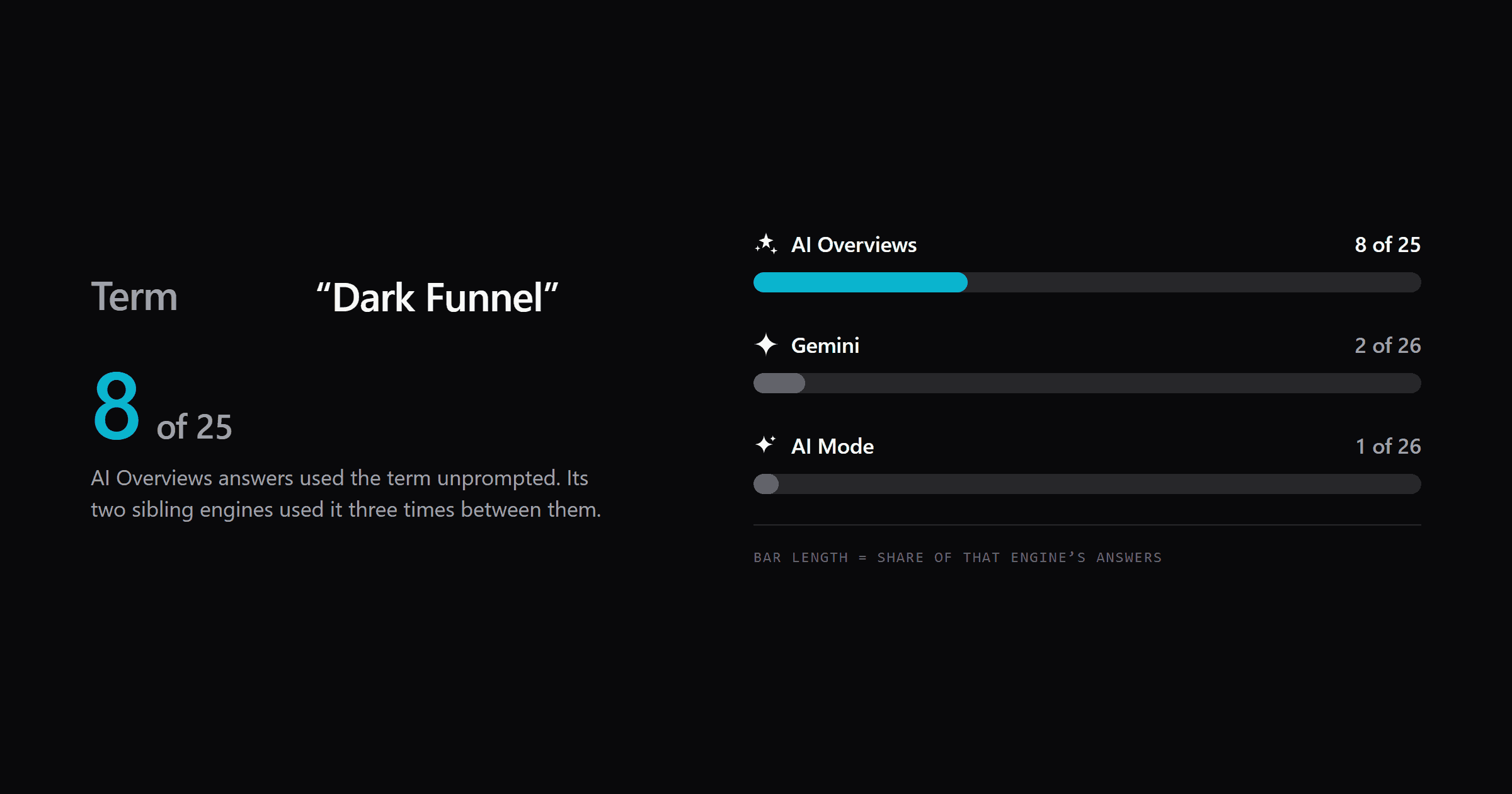
The four signals describe what appeared in observed AI answers. They do not measure visits, conversions, pipeline, or revenue, and those outcomes belong in separate analytics and attribution systems. The dark funnel in AI search, measured covers the buyer research these signals capture before any click.
The manual baseline playbook shows how to take a first measurement without a platform. Zumi tracks the four signals per engine, with the answers and cited pages behind each figure. Book a demo to see them on a real query set.